The AidGPT programme
Responsible AI training for complex, accountable work.
Build practical AI capability through live practice, visible safeguards and professional judgement.
Programme shape
Six live sessions
Each session keeps the same three operating principles in view: professional judgement, proportionate access and ownership of the result.
- Human judgement
- Think, Draft, Review. An accountable human decides.
- Bounded reach
- Use the least power needed for the task.
- Accountable work
- AI is useful only when a professional can explain, check and own the result.
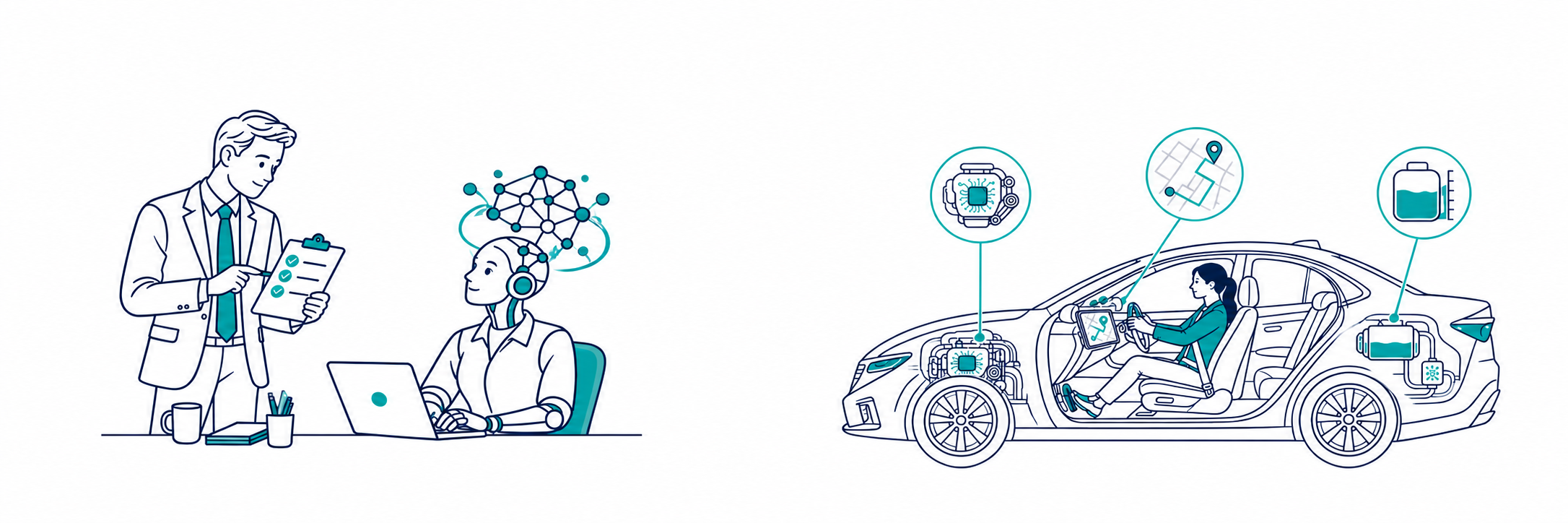
The learning journey
Six sessions. Six practical questions.
The sessions are cumulative. You begin by understanding and controlling individual AI tasks, then learn to verify the work, structure longer processes, manage connected access and build reusable systems. The final session turns those capabilities into decisions about risk, policy and responsible adoption.
-
Understand and control AI
What is AI, how should we think about it, and how can we control it?
Learn to choose a worthwhile task, give AI a proper brief and remain responsible for the purpose, constraints and final result.
Techniques and ideas
- AI as a system that predicts and generates rather than a source of inherent truth.
- AI as a thinking partner rather than an automatic answer machine.
- The CHEF framework for context, purpose, constraints, format and success.
- Recognising when AI adds risk, effort or false confidence instead of value.
Foundation. Establishes the foundation: understand what AI does, choose a worthwhile task and control the brief.
-
Trust and verify its work
When can we trust AI-generated work, and how should we challenge, check and verify it?
Learn to ground work in reliable sources, challenge the first answer, test important claims and explain material AI use when accountability requires it.
Techniques and ideas
- Source grounding and evidence boundaries.
- Iterative pushback and honest criticism.
- Claim checking and two-chat verification.
- Proportionate disclosure and visible uncertainty.
Builds on Question 1. Builds on a controlled brief by adding source grounding, challenge, verification and disclosure.
-
Structure longer work
What structures allow an AI system to work reliably over longer, multi-step tasks?
Learn to organise instructions, context, source material and intermediate outputs so useful work does not depend on one increasingly unreliable conversation.
Techniques and ideas
- Starting fresh conversations deliberately.
- Separating instructions, sources, working context and outputs.
- Reusable Projects and source packs.
- Designing carry-over rather than assuming the system remembers correctly.
Builds on Question 2. Carries verification into longer work by separating instructions, sources, context and intermediate outputs.
-
Connect it safely
What can AI reach and do through connectors, local files, browsers and computer access—and how should that access be controlled?
Learn to distinguish availability from authority, limit access to what the task requires and keep consequential actions behind an explicit human decision.
Techniques and ideas
- Read access versus write or action authority.
- Connector scope and revocation.
- Local-file, browser and computer-access boundaries.
- Evidence logging, review points and safe fallbacks.
Builds on Question 3. Adds connected capabilities only after the work, sources and review points have been structured.
-
Build useful systems
What useful applications become possible when we combine these capabilities with deliberate memory and reusable context?
Learn to turn a successful piece of AI-supported work into a repeatable system that retains the right instructions, sources, checks and organisational knowledge.
Techniques and ideas
- Deliberate memory rather than assumed recollection.
- Reusable instructions, Projects and skills.
- Combining trusted context with controlled access.
- Moving from a one-off chat to a repeatable professional workflow.
Builds on Question 4. Turns controlled, well-structured work into a repeatable system with deliberate memory and reusable context.
-
Govern responsible adoption
What does this mean for risk, accountability, organisational policy and the future of work?
Decide what should be adopted, what needs safeguards or policy, what remains experimental and what should stay human-led.
Techniques and ideas
- Individual and organisational accountability.
- Risk proportionate to the task and potential consequence.
- Policy, permissions and acceptable-use boundaries.
- Human judgement, role change and future working practices.
- Practical next steps after the course.
Builds on Question 5. Turns the accumulated capability into decisions about risk, policy and responsible adoption.
A structure for continuity
Project, chat and durable memory answer different questions.
- Project How should I work?
- Current chat What am I doing now?
- Durable memory What should remain useful later?
Teaching method
Demonstration, discussion and practice
The aim is not to know every tool. It is to develop a professional discipline that remains useful as the tools change.
Each session combines a practical demonstration, discussion and time to apply the ideas. Participants practise in a fictional humanitarian workplace so they can work with realistic documents, decisions and connected information without introducing sensitive operational data. Short preparation and between-session exercises allow the live time to focus on practice, questions and application to participants' own non-sensitive work.
Practice boundary
Practice without production data
The course does not require real organisational or personal data. Learners may later apply the disciplines to approved work through their organisation’s authorised tools, policies and authority.
- Assessed practice uses synthetic records.
- Think, Draft, Review keeps the decision with an accountable human.
Practical questions
Questions before you join
Do I need prior AI experience?
- No. The programme supports mixed confidence levels. You should be comfortable using a browser and willing to test, discuss and revise your work.
Which AI tools do I need?
- You need access to the course platform and an approved general-purpose AI workspace. We confirm practical access requirements before the cohort starts.
What if I miss a live session?
- Live participation matters because the course is practice-led. Contact us before applying if you already know you cannot attend every date, and contact the facilitation team promptly if something changes.
Will I receive a certificate?
- Learners who meet the stated completion requirements receive a certificate of completion. It is not an externally accredited professional certification.
Who can request the reduced rate?
- The EUR 280 rate is for eligible self-funding individuals, including specified national and local actors and aid workers between roles. Eligibility is confirmed during application; full criteria are in the terms.
Do I need to bring organisational data?
- No. Course practice uses fictional and synthetic records. Later transfer to real work must use your organisation’s authorised tools, policies and authority.
Can you support accessibility or participation needs?
- Yes. Tell us what would help when you apply or contact us before the cohort. We will confirm what support can be provided for the live sessions and course platform.
Can you adapt the programme for our organisation?
- Yes. Organisational programmes keep the responsible AI core while adapting roles, setting, source material, tools, policy and risk context through a scoped commissioning process.
Live facilitation
Two facilitators for every cohort
Every cohort is supported by two facilitators. The assigned pair varies by cohort, drawing on the experience most relevant to the group and confirmed delivery schedule.

Thomas Byrnes
Lead facilitator
15+ years in humanitarian operations across 20+ countries, lead author of the GIZ DCI AI Hub Global Evidence Review, and the Rights-Based Risk Framework for AI in Social Assistance.

Marie-Josée Hamel
Senior Consultant
Grounds live delivery and participant support in operational realities so the practice can transfer back into real teams.

Moayad Zarnaji
Facilitator
Humanitarian programme quality and evaluation specialist with 16+ years of experience in MEAL, partnerships, capacity building and crisis response across Syria and the wider region.

Albert Lamontagne
Facilitator
Humanitarian and community-sector practitioner, OCCAH coordinator, and researcher exploring practical and ethical uses of generative AI in humanitarian work.

Avril James
Director of Global Operations, MarketImpact
Aid professional with deep experience in programme design, remote management, partner-led implementation and emergency response across multiple regions.